
AI and Visualization
Gemini AI: Transforming Queries into 3D Experiences
Explore the cutting-edge fusion of AI and 3D modeling that promises to revolutionize how we seek and receive information.
The dawn of Gemini AI marks a groundbreaking shift in how we interact with digital information. Imagine a world where questions are not just answered with static text but with dynamic, interactive 3D models that bring answers to life. This is not science fiction; this is the transformative reality that Gemini AI offers. In a landscape where traditional search engines deliver pages of links, Gemini AI crafts an immersive experience, turning abstract concepts into tangible visuals.
The stakes are high. In industries ranging from education to engineering, the ability to visualize complex data and concepts can mean the difference between misunderstanding and mastery. Gemini AI leverages state-of-the-art machine learning algorithms to interpret queries and generate real-time 3D visualizations, effectively bridging the gap between human curiosity and machine intelligence.
This innovation promises not only to enhance user experience but also to reshape industries. By providing a more intuitive understanding of data, fields such as medicine, architecture, and design can harness this technology to push the boundaries of what’s possible. The implications are profound: a new era of learnability and accessibility.
The promise of Gemini AI lies in its capacity to transform a simple question into a multi-dimensional exploration. It invites users into a space where learning is interactive and intuitive, where visuals speak louder than words, and where the imagination is the only limit.
Chapter 01
The Genesis of Gemini AI
Understand the origins and technology behind Gemini AI's groundbreaking capabilities.
The Evolution of AI-Driven Visualization
The journey of AI-driven visualization began years ago with the advent of basic pattern recognition. However, the real breakthrough came with the integration of neural networks capable of interpreting complex data sets. Gemini AI stands on the shoulders of these technological giants, combining deep learning with advanced rendering techniques to produce 3D models that are not only accurate but also aesthetically engaging.
- Neural network advancements
- Integration of machine learning in visualization
- Evolution of rendering technologies
- Impact on educational systems
- Adoption in professional industries
- User engagement metrics
The Power of Visual Learning
Visual learning is not a new concept, but the ability to interact with information in three dimensions is revolutionary. Studies have shown that people retain information better when they can manipulate and explore it. Gemini AI taps into this principle by providing tools that allow users to explore data in a way that is both natural and intuitive.
Historical Context and Technological Milestones
The path to Gemini AI was paved by numerous technological milestones. From the development of the first 3D rendering engines to the rise of augmented reality, each step has contributed to a more immersive and interactive user experience. This historical context provides a foundation for understanding the significance of Gemini AI’s capabilities today.

The ability to visualize complex data in 3D transforms not only understanding but also the way we interact with information.
Dr. Elaine Mason
Chapter 02
How It Works: The Technology Behind the Magic
Dive into the mechanics of Gemini AI's 3D model generation and its impact on user interaction.
Narrative flow
Scroll through the argument
01
Interpreting Queries
Gemini AI begins by parsing the user's query using natural language processing to understand the context and intent. This initial step is crucial for generating a relevant 3D model.
02
Data Processing and Model Generation
Once the query is understood, Gemini AI accesses a vast database of pre-modeled assets and uses machine learning algorithms to construct a bespoke model that fits the query parameters.
03
Rendering and User Interaction
The generated model is then rendered in real-time, allowing for user interaction. Users can zoom, rotate, and manipulate the model, providing a fully immersive experience.
Building a 3D Model: An In-Depth Example
Consider a user asking about the structure of DNA. Gemini AI processes this request by accessing genomic data and algorithms to build an accurate 3D representation. This model is then rendered, allowing the user to explore the double helix in unprecedented detail.
Enhancing User Engagement with Interactive Models
The ability to interact with models enhances user engagement significantly. Users can manipulate models to better understand spatial relationships and complex structures, making learning both effective and engaging.
Common Challenges and Solutions
Despite its capabilities, Gemini AI faces challenges such as rendering lag and data accuracy. However, continuous updates and optimizations are in place to address these issues, ensuring a seamless user experience.
Gemini AI in Action
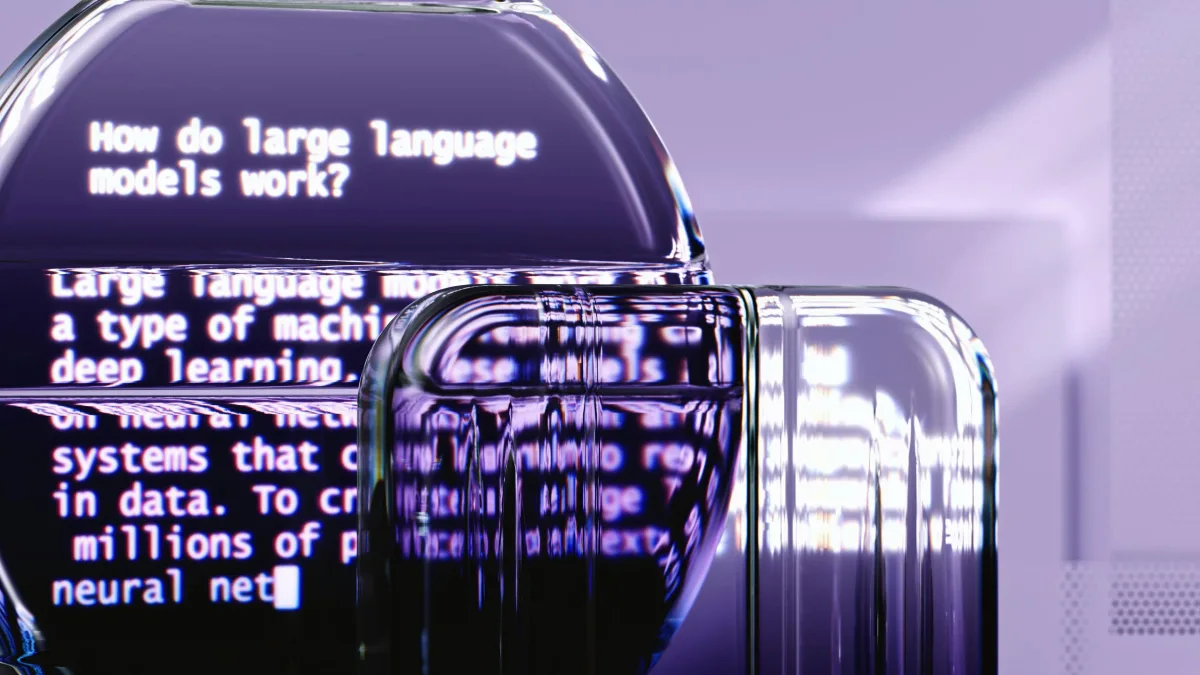


In the heart of Gemini AI’s success lies its ability to turn static information into dynamic experiences. As users engage with models, they uncover layers of understanding that traditional methods simply cannot offer. This mid-article insight delves into the transformative power of interactive learning and its potential to redefine how we perceive information.

Chapter 03
Real-World Applications and Case Studies
Explore how Gemini AI is applied across various industries, transforming workflows and user experiences.
Gemini AI in Action: Bridging the Gap
The real-world applications of Gemini AI are vast and varied. In the medical field, it provides doctors with 3D models of anatomical structures, aiding in diagnosis and treatment planning. In architecture, it allows designers to visualize projects before they are built, identifying potential issues early in the process.
- Medical imaging advancements
- Architectural visualization
- Educational tools and e-learning
- Product design and prototyping
- Historical artifact exploration
- Scientific research and analysis
A Case Study in Education
In a recent study, a group of students using Gemini AI to learn about cell biology performed significantly better on assessments than those using traditional textbooks. The ability to manipulate models and visualize complex systems contributed to a deeper understanding of the material.
Best Practices for Implementing Gemini AI
When integrating Gemini AI into workflows, it is essential to ensure that hardware can support the rendering requirements and that users are trained to maximize the tool’s capabilities. Best practices include regular updates and user feedback loops to continuously improve the experience.
Chapter 04
The Future of AI and 3D Modeling
Consider the long-term implications of AI-driven 3D modeling and what lies ahead in this ever-evolving field.
Beyond the Horizon: The Future of Information Interaction
As we look to the future, the potential for AI and 3D modeling to transform industries is limitless. The ability to interact with information in a tangible way will continue to evolve, driven by advancements in AI technology and user interface design. This chapter explores what the future holds for Gemini AI and similar technologies.
Practical Implementation and Next Steps
Organizations looking to adopt Gemini AI must consider the integration process and potential challenges. From data security to user training, a strategic approach is necessary to ensure a smooth transition and maximize benefits.
Trade-Offs and Caveats
While the benefits of 3D modeling are clear, there are trade-offs such as the need for high-performance computing and potential accessibility issues. Addressing these challenges is crucial to ensure that the technology is inclusive and effective.
The journey of Gemini AI is just beginning, but its impact is already profound. By transforming how we interact with information, it opens new doors to understanding and innovation. As we embrace this technology, we are reminded that with every question comes an opportunity for discovery. Gemini AI is the key that unlocks these opportunities.