JavaScript has long been the language of the web, but its reach is extending into the realm of embedded systems, particularly with the ESP32 microcontroller. This article explores the transformative potential of using JavaScript for OS development on the ESP32, a popular choice for IoT projects due to its low cost and powerful features.
Chapter 01
The Unlikely Pair
JavaScript and ESP32 may seem an unusual combination, yet their integration opens a new world of possibilities for developers.
JavaScript on ESP32: Bridging Two Worlds
The ESP32, with its dual-core processor and built-in Wi-Fi and Bluetooth, is a powerhouse in the microcontroller space. Traditionally, developers used C/C++ to harness its capabilities, but with frameworks like Espruino and Moddable, JavaScript is now a viable option.
Why JavaScript?
JavaScript is known for its versatility and ease of use. Its asynchronous nature is well-suited for handling multiple tasks, which is a boon for IoT applications. Developers familiar with JavaScript can quickly adapt to ESP32 development, reducing the learning curve.
Getting Started
To begin developing with JavaScript on the ESP32, you need to set up an environment that supports the language. Tools like Espruino provide an interactive JavaScript environment on the microcontroller, allowing for rapid development and testing.
// Blink an LED on ESP32 using JavaScript
var led = NodeMCU.D4;
setInterval(function() {
digitalWrite(led, !digitalRead(led));
}, 1000);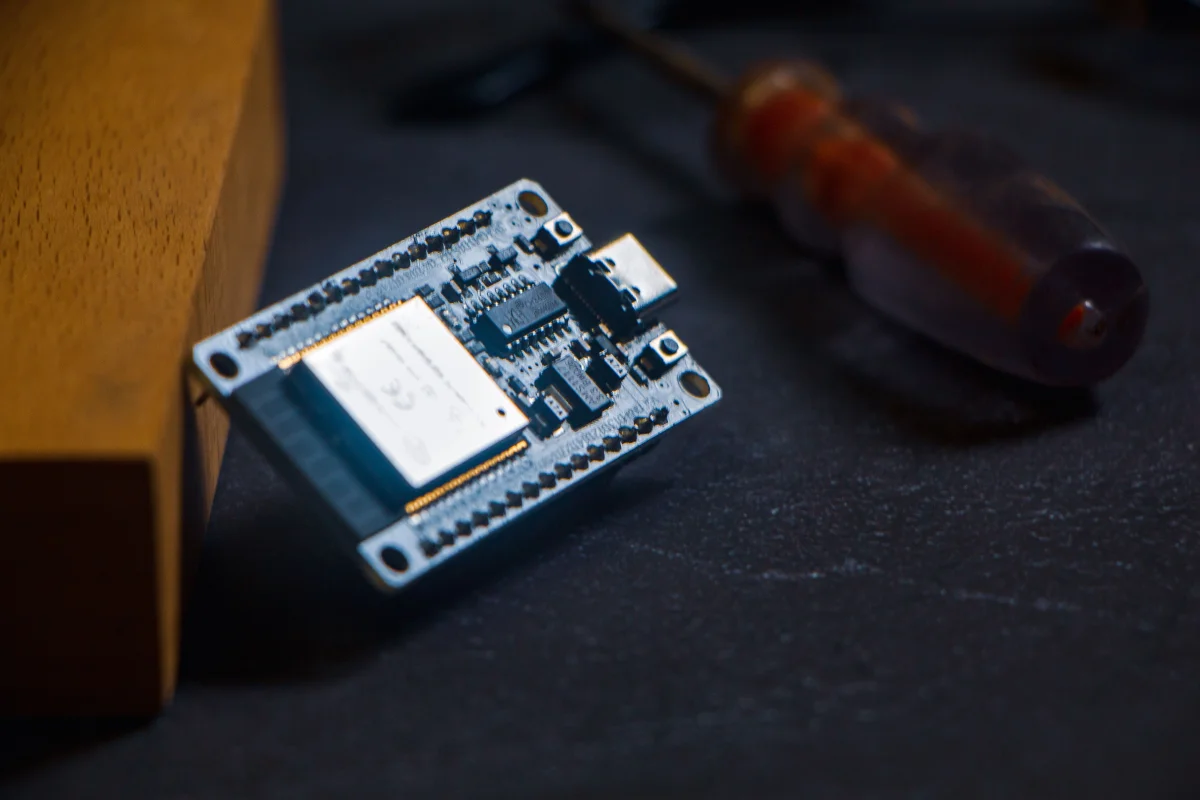
JavaScript has long been the language of the web, but its reach is extending into the realm of embedded systems, particularly with the ESP32 microcontroller.
A senior IoT developer
Chapter 02
Challenges and Solutions
While promising, JavaScript on ESP32 comes with its own set of challenges, particularly concerning performance and resource management.
Performance Considerations
Running JavaScript on a microcontroller like the ESP32 involves trade-offs, especially regarding performance and real-time capabilities. The language’s high-level nature can introduce latency, which is critical in embedded systems where timing is everything.
Optimizing Event Loops
Event loops are at the heart of JavaScript applications. In the context of embedded systems, optimizing these loops is crucial to ensure real-time performance. This often involves minimizing blocking code and leveraging asynchronous functions effectively.
Narrative flow
Scroll through the argument
01
Understanding Event Loops
The event loop in JavaScript handles events and executes code from the event queue. It's essential to keep this loop as unblocked as possible.
02
Minimize Blocking Code
Avoid long-running synchronous operations. Instead, use asynchronous functions to prevent the event loop from stalling.
03
Leverage Hardware Timers
Utilize the ESP32's hardware timers for tasks that require precise timing, offloading work from the main JavaScript thread.
JavaScript and ESP32 in Action

Chapter 03
Future Prospects
The integration of JavaScript into ESP32 development is just the beginning. As the ecosystem evolves, so too will the potential applications.
The Path Forward
The future of JavaScript on microcontrollers like the ESP32 is promising. As more developers embrace this paradigm, we can expect to see a proliferation of libraries and tools designed to optimize and streamline development processes.
Embracing the Ecosystem
Communities and ecosystems are vital for the growth of any technology. JavaScript’s vast library ecosystem is a significant advantage, providing ready-made solutions for common problems and accelerating development timelines.
The adoption of JavaScript for ESP32 development is a testament to the language’s flexibility and the innovation of the developer community. By bridging the gap between web technologies and embedded systems, we are witnessing a new era of IoT development that is more inclusive and dynamic.