JavaScript’s emergence in embedded systems development is transforming how we think about IoT devices. The ESP32, a popular microcontroller, is at the forefront of this revolution, now capable of running a full JavaScript operating system. This fusion offers the promise of rapid development and prototyping, leveraging JavaScript’s widespread familiarity among developers.
Chapter 01
The Rise of JavaScript in Embedded Systems
JavaScript has made its mark in web development, but its role in embedded systems is a new frontier. How does it operate on a microcontroller like the ESP32?
JavaScript’s Journey to the ESP32
JavaScript, primarily known for web development, is carving out a niche in embedded systems. The ESP32, with its robust processing power and connectivity options, serves as an ideal platform for experimenting with JavaScript in a hardware context. Frameworks like Espruino allow developers to write JavaScript code directly for the ESP32, simplifying the transition from traditional web applications to embedded systems.
// Toggle an LED on ESP32 using JavaScript
setInterval(function() {
digitalWrite(LED, !digitalRead(LED));
}, 1000);
Benefits and Challenges
The primary advantage of using JavaScript on the ESP32 lies in its accessibility. Developers can leverage existing JavaScript knowledge to create complex IoT applications without delving deeply into lower-level languages like C or C++. However, this ease of use does not come without challenges. JavaScript’s high-level nature can introduce performance overheads, leading to inefficiencies that are critical in resource-constrained environments.
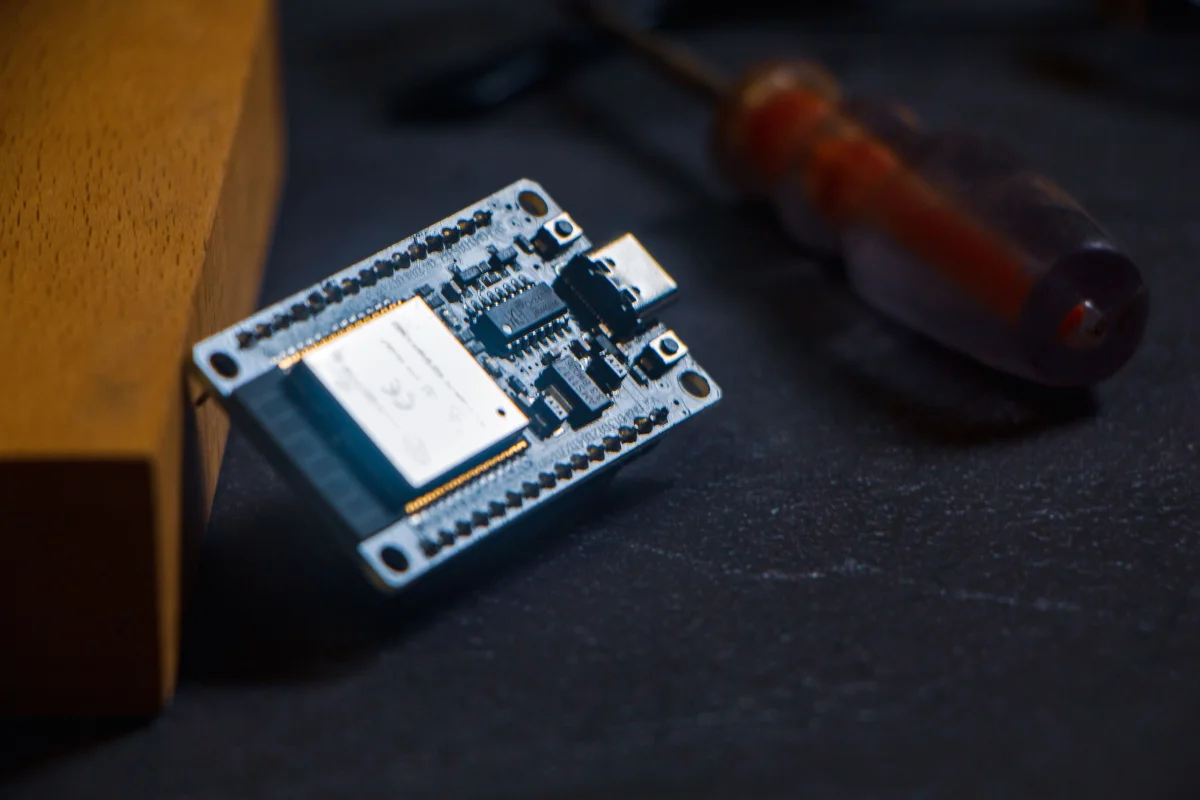
JavaScript's emergence in embedded systems development is transforming how we think about IoT devices.
A systems engineer
Chapter 02
Building a JavaScript OS
Developing an operating system in JavaScript for the ESP32 involves intricate challenges and innovative solutions. Here's how it unfolds.
Architecture of a JavaScript OS
Crafting an OS in JavaScript for the ESP32 involves several architectural decisions. The real-time operating system (RTOS) at the core manages tasks and processes, while JavaScript serves as the application layer, executing scripts that interact with the hardware. This hybrid approach balances the flexibility of JavaScript with the performance needs of embedded systems.
Narrative flow
Scroll through the argument
01
Step 1: Layering the RTOS
Begin by establishing a robust RTOS foundation that can handle multitasking efficiently, managing the ESP32's resources.
02
Step 2: Integrating JavaScript
Embed a JavaScript engine like Duktape or JerryScript to interpret and execute scripts on top of the RTOS.
03
Step 3: Optimizing Performance
Continuously profile and optimize JavaScript execution to minimize latency and resource usage on the ESP32.
Real-World Applications
The potential applications for a JavaScript OS on the ESP32 are vast. From smart home devices to industrial sensors, the ability to rapidly prototype and deploy IoT solutions is greatly enhanced. Developers can iterate quickly, deploying updates over-the-air and adjusting system behavior with JavaScript’s dynamic syntax.
JavaScript OS in Action



The integration of JavaScript into the realm of embedded systems marks a significant evolution in IoT development. While challenges in performance and resource management persist, the benefits of accessibility and rapid prototyping offer compelling reasons for developers to explore this innovative path. As JavaScript continues to adapt to the constraints of embedded environments, the ESP32 stands as a testament to how cross-domain technologies can redefine the boundaries of what’s possible.