Imagine standing on the brink of a cryptographic revolution. The Enigma machine, once a symbol of unbreakable security, meets its match not in human genius, but in the cold logic of Field Programmable Gate Arrays (FPGAs). This is a tale of historical intrigue meeting technological innovation, where digital logic brings history’s secrets to light.
Chapter 01
The Legacy of Enigma
Explore the historical significance of the Enigma machine and its impact on cryptography.
The Enigma Machine: A Historical Marvel
The Enigma machine was a cipher device used during World War II, renowned for its complexity. Its purpose was to encode messages in a way that seemed impenetrable. The machine’s security relied on a series of rotors and wiring that shifted with each keystroke, creating a cipher that was virtually impossible to crack without knowledge of the settings.
- First used by German military forces
- Capable of millions of permutations
- Relied on mechanical and electrical pathways
- A key tool in wartime communication
- Broken by Polish cryptanalysts in 1932
- Further deciphered by Alan Turing and his team
Cracking Enigma: The Pre-FPGA Era
Before FPGAs, breaking Enigma required a combination of human intuition and rudimentary machines. The Bombe, developed by Alan Turing, was one such machine that used a mechanical process to reduce the possible settings. However, this method was slow and resource-intensive.
The Role of Modern Technology
With advancements in technology, particularly FPGAs, the process of breaking Enigma has been revolutionized. These programmable chips allow for the rapid simulation and testing of various settings, drastically reducing the time and effort required.

The Enigma machine, once a symbol of unbreakable security, meets its match not in human genius, but in the cold logic of Field Programmable Gate Arrays (FPGAs).
Chapter 02
Harnessing FPGA Power
Dive into the technical aspects of using FPGA to emulate and break the Enigma code.
Narrative flow
Scroll through the argument
01
Step 1: Understanding FPGA Architecture
FPGAs consist of an array of configurable logic blocks, allowing for parallel processing that is ideal for cryptographic tasks.
02
Step 2: Implementing the Enigma Algorithm
With VHDL, the Enigma's rotor wiring and stepping mechanism can be programmed directly into an FPGA, enabling rapid testing of cipher combinations.
03
Step 3: Optimizing for Speed
By leveraging the parallel nature of FPGAs, the Enigma's settings can be tested at lightning speed, far surpassing traditional computational methods.
Implementing Enigma on FPGA
To recreate the Enigma machine’s functionality on an FPGA, we first need to model its logic using VHDL. This involves defining the rotor settings and the stepping sequence.
library IEEE;
use IEEE.STD_LOGIC_1164.ALL;
use IEEE.STD_LOGIC_ARITH.ALL;
use IEEE.STD_LOGIC_UNSIGNED.ALL;

entity Enigma is
  Port ( clk : in STD_LOGIC;
         reset : in STD_LOGIC;
         input_signal : in STD_LOGIC_VECTOR(7 downto 0);
         output_signal : out STD_LOGIC_VECTOR(7 downto 0));
end Enigma;

architecture Behavioral of Enigma is
  -- Rotor configuration and logic here
begin
  -- Process to handle rotor stepping and encoding
end Behavioral;
FPGA: A New Era of Cryptography
FPGAs provide an unparalleled advantage in cryptographic applications due to their ability to handle complex algorithms in parallel. This capability transforms how we approach problems like Enigma, making what was once a monumental challenge a feasible task.
Common Misconceptions
One common misconception is that FPGAs require extensive hardware knowledge. While understanding digital logic is beneficial, many tools now exist to ease the learning curve, enabling more engineers to harness their power.
FPGA in Action
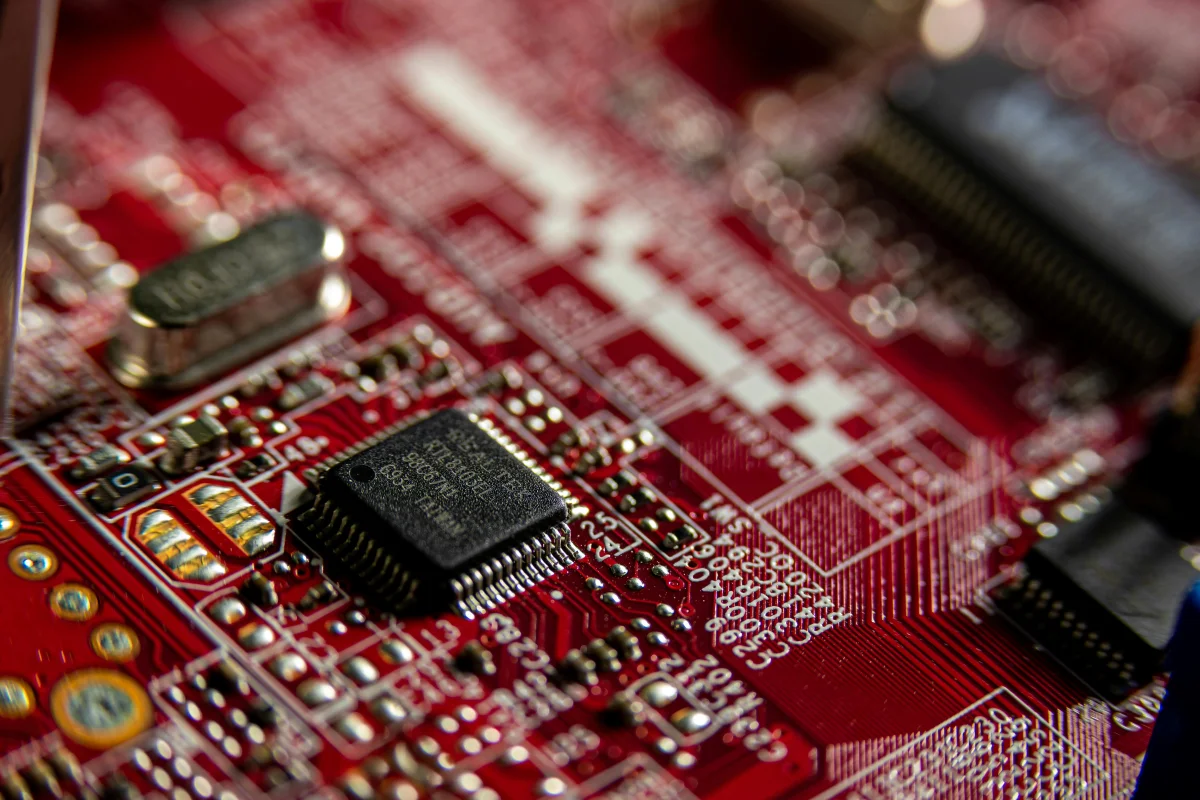
FPGAs are not just tools for engineers—they are gateways to historical exploration and modern innovation. By recreating the Enigma machine, we open doors to new cryptographic possibilities and honor the ingenuity of past codebreakers.
Chapter 03
Future Prospects
Consider the implications of FPGA technology in future cryptographic and historical research.
FPGA and the Future of Cryptography
The journey of breaking Enigma with FPGA technology is not just a nod to history but a glimpse into the future of cryptography. As FPGAs become more accessible, their potential applications expand beyond historical codes.
- Enabling real-time cryptographic analysis
- Facilitating secure communications
- Revolutionizing digital forensics
- Enhancing machine learning models
- Supporting complex simulations for research
- Providing robust frameworks for cybersecurity
Real-World Applications
One compelling application is in the realm of secure communications. With their ability to process data rapidly, FPGAs can enhance encryption algorithms, making them more resistant to attacks.
Best Practices for FPGA Development
When developing FPGA solutions, it’s critical to:
- Clearly define the problem scope.
- Leverage existing libraries and tools.
- Focus on parallel processing capabilities.
- Continuously test and optimize for efficiency.
- Stay updated with the latest FPGA advancements.
- Collaborate with a community of developers and enthusiasts.
Chapter 04
Reflections and Next Steps
Reflect on the journey of breaking Enigma and explore the next steps for FPGA enthusiasts.
Reflecting on the Journey
The process of breaking Enigma with FPGA is a powerful reminder of how far technology has come. It underscores the importance of innovation and the relentless pursuit of knowledge.
Practical Implementation
For those interested in pursuing FPGA projects, start with small, manageable tasks. Utilize online resources and communities to gain a deeper understanding of both the hardware and the applications.
Trade-offs and Considerations
While FPGAs offer tremendous speed and flexibility, they also require careful planning and understanding of digital logic. Balancing these trade-offs is key to successful implementation.
Embarking on the journey of breaking Enigma with FPGA is more than a technical challenge—it’s a bridge between past ingenuity and future potential. Harness the power of FPGAs, and the possibilities are endless.