
In an astonishing breakthrough, researchers at the SLAC National Accelerator Laboratory have discovered a new magnetic phase known as altermagnetism. This groundbreaking phase challenges existing paradigms and opens up exciting avenues for technological innovation.
Chapter 01
The Discovery of Altermagnetism
Unveiling a new phase in magnetic materials, SLAC researchers push the boundaries of physics.
A Fresh Perspective on Magnetism
Altermagnetism blends features of ferromagnets, with their parallel magnetic moments, and antiferromagnets, where moments are antiparallel. This intriguing hybrid provides novel opportunities for applications that demand precise magnetic regulation.
The Experimental Breakthrough
The team at SLAC employed advanced techniques like synchrotron radiation and cutting-edge computational modeling to observe and detail this innovative phase. These methods offered deep insights into the atomic-level alignments and interactions of magnetic moments.

In an astonishing breakthrough, researchers at the SLAC National Accelerator Laboratory have discovered a new magnetic phase known as altermagnetism.
A materials science researcher
Implications for Technology
Finding altermagnetism goes beyond theoretical achievement; it has significant applied potential. The excitement centers on its use in energy-efficient computing and advanced data storage systems, where magnetic properties are vital.
Chapter 02
Exploring Altermagnetism's Potential
Delving into the applications and future impact of this new magnetic phase.
Potential Applications
- Energy-Efficient Computing: Altermagnetism could pave the way for processors that require less energy, cutting heat output and boosting efficiency.
- Enhanced Data Storage: With its distinctive magnetic characteristics, it could lead to devices with higher data storage density, transforming information access and storage.
- Quantum Computing: It holds promise for use in quantum systems, where stable and high-performance qubits benefit from magnetic phases.
Narrative flow
Scroll through the argument
01
Step 1
Identifying unique magnetic alignments at atomic levels.
02
Step 2
Integrating altermagnetism into existing technologies.
03
Step 3
Exploring new avenues in quantum and classical computing.
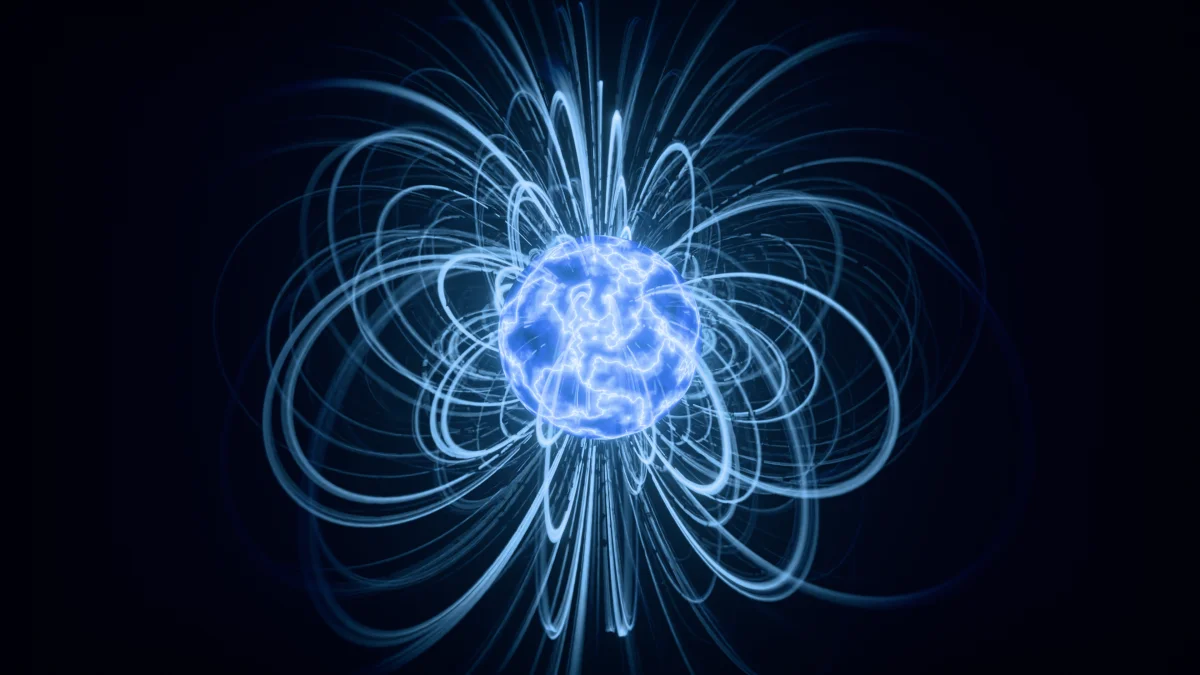
Visual Insights into Altermagnetism


Challenges and Future Directions
While altermagnetism shows great promise, its practical use comes with challenges. Reproducing this phase in bulk materials and seamlessly integrating it with current technologies are significant obstacles. Nonetheless, research efforts at SLAC and other venues continue to forge paths toward future advancements.
The discovery of altermagnetism represents a pivotal moment for magnetic materials. As ongoing research explores its properties and applications, this new phase could usher in transformative technological advances.